Every game console, from the newest release to a cherished classic from your childhood, has one thing in common: it needs power to bring its digital worlds to life. But when a power cord frays or goes missing, finding a replacement can feel surprisingly complex. You might see terms like charger, adapter and power cable used interchangeably, but they aren’t always the same thing.
This guide will explain the fundamentals of game console power supplies. We’ll explore what these components are, how they differ and why using the correct one is crucial for protecting your hardware. By the end, you’ll understand how to safely and effectively power both retro and modern consoles.
What Are Game Console Power Supplies?
At the most basic level, game console power supplies are devices that deliver electricity from a wall outlet to your console. However, the power that comes from your outlet is not in a form that delicate electronics can use directly. The job of a power supply is to convert that raw electrical energy into a safe, usable format.
These components come in a few different forms, primarily as adapters and simple cables. The type your console needs depends entirely on its internal design.
Console Power Adapters vs. Power Cables
While both get electricity to your console, there’s a key difference between an AC adapter and a power cable. Understanding this distinction is the first step toward finding the right replacement.
Console Power Adapters
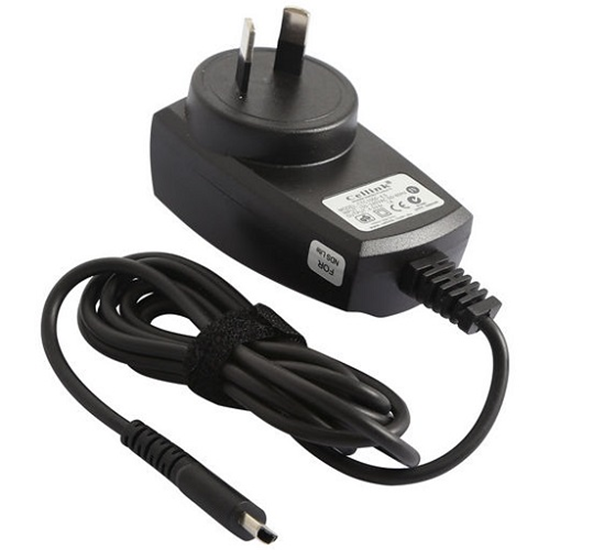
A console power adapter, often called an AC adapter or “power brick,” is a device that converts the high-voltage alternating current (AC) from your wall outlet into the low-voltage direct current (DC) that a console needs to operate. Most electronic devices, including game consoles, run on DC power.
You can usually spot an adapter by the boxy component located somewhere along the cord, either at the plug or in the middle of the cable. These adapters are essential for consoles that do not have this conversion hardware built into their main chassis. Many handhelds, like the Nintendo DS Lite and older home consoles, such as the Nintendo Entertainment System (NES), rely on external power adapters.
Console Power Cables
A console power cable is much simpler. It is a straightforward cord that transfers AC power directly from the wall outlet to the console. These are used for machines that have a power supply unit (PSU) built directly inside the console’s main body. The internal PSU handles the AC to DC conversion.
Modern consoles like the PlayStation 5 and Xbox Series X use simple AC power cables. Their internal design is robust enough to house the conversion hardware, which means you don’t need a bulky external brick. Many older devices, like the Sega Dreamcast and the original PlayStation, also used this internal power supply design.
Why Console Power Compatibility Is So Important
You can’t just plug any power cord into any console. Every electronic device is engineered with specific voltage requirements for consoles, along with amperage and polarity needs. Using the wrong power supply can lead to a range of problems, from the console simply not turning on to permanent, irreversible damage.
Here are the three key factors to consider:
- Voltage (V): This measures electrical pressure. Supplying too much voltage can fry your console’s sensitive internal components. Supplying too little will prevent it from turning on or cause it to shut down unexpectedly.
- Amperage (A): This measures electrical current. The power supply must be able to provide at least the minimum amperage the console requires. A power supply with a lower-than-required amperage will overheat and fail, while one with a higher amperage is fine, as the console will only draw the current it needs.
- Polarity: This applies to DC connectors and indicates the direction of the electrical current. If the polarity of the adapter’s plug doesn’t match the console’s port, you risk short-circuiting and damaging the device.
Because of these precise needs, it is always best to find a replacement game console charger or cable that is specifically designed for your model.
Common Problems from Using the Wrong Charger
Using an incorrect or low-quality power supply is a gamble. It might seem to work at first, but it could be causing silent damage or setting you up for future failure.
Common issues include:
- Failure to Power On: The most obvious sign is that the console won’t turn on at all because it’s not receiving the correct voltage.
- Overheating: An incompatible or poorly made adapter can overheat, creating a fire hazard and potentially melting its own casing or the console’s power port.
- System Instability: The console might turn on but crash, freeze or restart randomly during gameplay due to an inconsistent power delivery.
- Permanent Damage: The worst-case scenario is irreversible damage to the console’s motherboard or internal power regulation circuits, rendering the console useless.
Powering Retro vs. Modern Consoles
Power needs have evolved over the generations, creating different considerations for owners of retro and modern hardware.
Retro Console Power Supply
Finding a retro console power supply can be challenging. Original power supplies for consoles like the NES, SNES or Sega Genesis are decades old and may no longer be reliable. These older consoles often used proprietary connectors and had very specific power requirements, making one-size-fits-all solutions risky.
For example, the NES requires an AC adapter that outputs 9V AC, which is very different from the DC output of most other console adapters. Plugging a standard DC adapter into an NES can damage it. When your original hardware fails, looking for a high-quality reproduction designed for your specific system is the safest approach. Retailers like Campad Electronics offer dedicated power supplies for classic consoles, including the Nintendo DS Lite and even the Gameboy Micro, taking the guesswork out of finding a compatible replacement.
Modern Console Power Cord
Powering modern machines is typically more straightforward. Consoles like the PlayStation 4, PlayStation 5, Xbox One and Xbox Series S/X all use internal power supplies. This means they just need a standard modern console power cord to connect to the wall.
These cables are often interchangeable between devices that use the same connector type (like the common “figure-8” or 3-prong connectors). However, it’s still important to use a high-quality, well-insulated cable to ensure a safe and stable connection. Cheap, uncertified cables can be a fire risk or fail to deliver consistent power.
Finding the Right Power Solution for Your Console
Whether you’re reviving a classic or replacing a lost cord for your current system, understanding your console’s power needs is essential. Always check the model number and power requirements printed on the console itself. From there, you can confidently find the correct game console chargers or cables to get back to gaming.
Taking a moment to match the voltage, amperage and connector type will protect your investment and ensure you can enjoy your favourite games for years to come.